Buy buecherx.eu ?
We are moving the project
buecherx.eu .
Are you interested in purchasing the domain
buecherx.eu ?
domain@kv-gmbh.de · 0541-91531010
Buy buecherx.eu ?
When did the Atlantic Ocean originate?
The Atlantic Ocean is estimated to have originated around 200 million years ago during the breakup of the supercontinent Pangaea. This process of continental drift and seafloor spreading led to the formation of the Atlantic Ocean as we know it today. The ocean continues to evolve and change due to tectonic activity and other geological processes. **
When did the Atlantic Ocean form?
The Atlantic Ocean began forming around 200 million years ago during the breakup of the supercontinent Pangaea. This process of continental drift and seafloor spreading continued over millions of years, leading to the formation of the Atlantic Ocean as we know it today. The ocean's formation was a result of tectonic plate movements and volcanic activity along the mid-Atlantic Ridge. **


Similar search terms for Atlantic
Top-Angebote
Products related to Atlantic:
-
Lisa Damour 3 Books Collection Set - Non-Fiction - Paperback Atlantic BooksTitles in This Set: 1. Untangled 2. Under Pressure: Confronting the Epidemic of Stress and Anxiety in Girls 3. The Emotional Lives of Teenagers Description: Untangled We expect an enormous amount from our teenage girls in a world where they are bombarded with messages about how they should look, behave, succeed. Yet we also speak as though adolescence is a nightmare rollercoaster ride for both parent and child, to be endured rather than enjoyed. In Untangled, world authority and clinical psychologist Lisa Damour provides an accessible, detailed, comprehensive guide to parenting teenage girls. She believes there is a predictable blueprint for how girls grow; seven easily recognisable 'strands' of transition from childhood through adolescence and on to adulthood. Girls naturally develop at different rates, typically on more than one front, and the transition will be unique to every girl. Each chapter describes a phase, such as 'contending with adult authority' and 'entering the romantic world', with hints and tips for parents and daughters, and a 'when to worry' section. Damour writes sympathetically and clearly, providing a practical and helpful guide for any parent, and for teenage girls too. Under Pressure Though anxiety has risen among young people overall, recent research studies confirm that it has skyrocketed in girls since the turn of the century. So what's to blame? And how can we help these girls? In the same engaging, anecdotal style and reassuring tone that won over thousands of readers of her first book, Untangled, clinical psychologist Lisa Damour starts by examining the science of stress and anxiety, then turns to the many facets of girls' lives where stress hits them hard: the parental expectations they face at home, pressures at school, social anxiety among their peers, and on social media. Exploring the multiple layers of girls' lives, Damour shows us the critical steps we can take to shield them from the toxic stress to which both our culture and also we, as their caregivers, subject them. The Emotional Lives of Teenagers An urgently needed guide to help parents understand their teenagers' intense and often fraught emotional lives - and how to support them through this critical developmental stage - from the bestselling author of Untangled and Under Pressure In teenagers, powerful emotions come with the territory. And with so many of today's teens contending with academic pressure, social media stress, worries about the future and concerns about their own mental health, it's easy for them - and their parents - to feel anxious and overwhelmed. But it doesn't have to be that way. With clear, research-informed explanations alongside illuminating, real-life examples, The Emotional Lives of Teenagers gives parents the concrete, practical information they need to steady their teens through the bumpy yet transformational journey into adulthood.26,99 £*Shipping: 2,99 £Secure redirect to the provider
-
atlanticsaunas Atlantic Saunas Infrared Snug Sauna (Atlantic Glow 1.2)The Atlantic Saunas Infrared Snug 2 Person Sauna brings that cosy sauna vibe home. It keeps the best bits of the original Snug but replaces the traditional stove with far infrared heat, so you get more space inside and a gentler, steady warmth that’s easy to sink into. It’s made for two and fits...2799,00 £*Shipping: 0,00 £Secure redirect to the provider
-
atlanticsaunas Atlantic Saunas Mono Infrared Sauna (Atlantic Glow 0.9)The Atlantic Saunas Mono Infrared Sauna gives you a calm little space to pause and reset. It’s designed for one person and uses carbon nano infrared heaters that create a steady, even warmth without pushing up the air temperature too much. The digital control panel is placed on the outside, so...2099,00 £*Shipping: 0,00 £Secure redirect to the provider
-
The Menopause Brain by Dr. Lisa Mosconi - Non Fiction - Paperback Atlantic BooksMenopause and perimenopause are still baffling to most doctors, leaving patients exasperated as they grapple with symptoms ranging from hot flashes to insomnia to brain fog. As a leading neuroscientist and women's brain health specialist, Dr Mosconi unravels these mysteries by revealing how menopause doesn't just impact the ovaries - it's a hormonal show in which the brain takes centre stage. The decline of the hormone estrogen during menopause influences everything from body temperature to mood to memory, potentially paving the way for cognitive decline later in life. To conquer these challenges successfully, Dr. Mosconi brings us the latest approaches - explaining the role of cutting-edge hormone replacement therapies like 'designer estrogens,' hormonal contraception and key lifestyle changes encompassing diet, exercise and self-care. Best of all, Dr Mosconi dispels the myth that menopause signifies an end, demonstrating that it's actually a transition. Contrary to popular belief, if we know how to take care of ourselves during menopause, we can emerge with a renewed, enhanced brain - ushering in a meaningful and vibrant new chapter of life.10,99 £*Shipping: 2,99 £Secure redirect to the provider




-
How deep is the Atlantic on average?
The average depth of the Atlantic Ocean is approximately 12,000 feet (3,660 meters). **
-
How can one sail across the Atlantic?
Sailing across the Atlantic can be done by either joining a crew on a sailing yacht or by captaining your own boat. It's important to have the necessary sailing skills and experience, as well as knowledge of navigation, weather patterns, and safety procedures. Planning the route, preparing the boat with necessary supplies and equipment, and obtaining the required permits and documentation are also crucial. It's advisable to have a support team on land to monitor your progress and provide assistance if needed. **
-
Is the Atlantic Ocean larger than Africa?
No, the Atlantic Ocean is not larger than Africa. Africa is the second largest continent in the world, covering an area of about 11.7 million square miles, while the Atlantic Ocean is the second largest ocean in the world, covering an area of about 41.1 million square miles. Therefore, Africa is significantly larger than the Atlantic Ocean. **
-
How cold is it in the Atlantic?
The temperature of the Atlantic Ocean varies depending on the location and time of year. In general, the surface water temperature can range from as low as 0°C (32°F) in the northern regions to as high as 30°C (86°F) in the tropics. The deeper water in the Atlantic tends to be colder, with temperatures dropping significantly in the deeper layers. Overall, the Atlantic Ocean can be quite cold in the northern regions and warmer in the southern and tropical regions. **

Where do the Atlantic and Pacific Oceans meet?
The Atlantic and Pacific Oceans meet at Cape Horn, located at the southernmost tip of South America in Chile. This iconic landmark is known for its treacherous waters and strong winds, making it a challenging point for sailors to navigate. Cape Horn is a significant maritime location where the two great oceans converge, creating a dramatic and awe-inspiring natural phenomenon. **
Is the Mediterranean as salty as the Atlantic?
The Mediterranean Sea is generally saltier than the Atlantic Ocean. This is because the Mediterranean has a higher evaporation rate compared to its freshwater input, leading to a higher concentration of salt. The Atlantic Ocean, on the other hand, receives a larger volume of freshwater input from rivers and precipitation, which helps to lower its overall salinity levels. **
Top-Angebote
Products related to Atlantic:
-
Various Joblot Wholesale of 20 Non-Fiction Books Collection Set Self-Help, Health, Biography, Cooking, Business, Craft, Hobbies and morePlease Note: £12.99 delivery charge applies to all Joblot and Bulk Buy orders. Joblot Wholesale of 20 Non-Fiction Books Collection Set Self-Help, Health, Biography, Cooking, Business, Craft, Hobbies, Travels, Finance and more. We are one of the biggest on-line retailers in the UK - with thousands of books in stock, sometimes we get clearance lines and end of lines that we need to shift from our warehouse, this box will contain 20 books which will be brand new (may have some shelve ware or dust on them) 20 Non-Fiction books Chosen randomly Brand new books Best seller and popular authors books Collection of reading, learning and educational material Parcel will be delivered by Courier Related Tags: Usborne, Usbourne NOTE: THESE ARE RANDOMLY PICKED AND MAY HAVE DUPLICATE TITLES NOTE: NOT SUITABLE FOR SCHOOL27,00 £*Shipping: 2,99 £Secure redirect to the provider
-
Christopher Hitchens 4 Books Collection Set - Non Fiction - Paperback Atlantic BooksTitles in this set: The Missionary Position Mortality God Is Not Great Hitch 22 Description: The Missionary Position In this frank and damning exposé of the Teresa cult, Hitchens details the nature and limits of one woman's mission to help the world's poor. He probes the source of the heroic status bestowed upon an Albanian nun whose only declared wish was to serve God. He asks whether Mother Teresa's good works answered any higher purpose than the need of the world's privileged to see someone, somewhere, doing something for the Third World. Mortality During the American book tour for his memoir, Hitch-22, Christopher Hitchens collapsed in his hotel room with excruciating pain in his chest. As he would later write in the first of a series of deeply moving Vanity Fair pieces, he was being deported 'from the country of the well across the stark frontier that marks off the land of malady.' Over the next year he experienced the full force of modern cancer treatment. God Is Not Great God Is Not Great is the ultimate case against religion. In a series of acute readings of the major religious texts, Christopher Hitchens demonstrates the ways in which religion is man-made, dangerously sexually repressive and distorts the very origins of the cosmos. Above all, Hitchens argues that the concept of an omniscient God has profoundly damaged humanity. Hitch 22 In this long-awaited and candid memoir, Hitchens re-traces the footsteps of his life to date, from his childhood in Portsmouth, with his adoring, tragic mother and reserved Naval officer father; to his life in Washington DC, the base from which from he would launch fierce attacks on tyranny of all kinds.19,49 £*Shipping: 2,99 £Secure redirect to the provider
-
Lisa Damour 3 Books Collection Set - Non-Fiction - Paperback Atlantic BooksTitles in This Set: 1. Untangled 2. Under Pressure: Confronting the Epidemic of Stress and Anxiety in Girls 3. The Emotional Lives of Teenagers Description: Untangled We expect an enormous amount from our teenage girls in a world where they are bombarded with messages about how they should look, behave, succeed. Yet we also speak as though adolescence is a nightmare rollercoaster ride for both parent and child, to be endured rather than enjoyed. In Untangled, world authority and clinical psychologist Lisa Damour provides an accessible, detailed, comprehensive guide to parenting teenage girls. She believes there is a predictable blueprint for how girls grow; seven easily recognisable 'strands' of transition from childhood through adolescence and on to adulthood. Girls naturally develop at different rates, typically on more than one front, and the transition will be unique to every girl. Each chapter describes a phase, such as 'contending with adult authority' and 'entering the romantic world', with hints and tips for parents and daughters, and a 'when to worry' section. Damour writes sympathetically and clearly, providing a practical and helpful guide for any parent, and for teenage girls too. Under Pressure Though anxiety has risen among young people overall, recent research studies confirm that it has skyrocketed in girls since the turn of the century. So what's to blame? And how can we help these girls? In the same engaging, anecdotal style and reassuring tone that won over thousands of readers of her first book, Untangled, clinical psychologist Lisa Damour starts by examining the science of stress and anxiety, then turns to the many facets of girls' lives where stress hits them hard: the parental expectations they face at home, pressures at school, social anxiety among their peers, and on social media. Exploring the multiple layers of girls' lives, Damour shows us the critical steps we can take to shield them from the toxic stress to which both our culture and also we, as their caregivers, subject them. The Emotional Lives of Teenagers An urgently needed guide to help parents understand their teenagers' intense and often fraught emotional lives - and how to support them through this critical developmental stage - from the bestselling author of Untangled and Under Pressure In teenagers, powerful emotions come with the territory. And with so many of today's teens contending with academic pressure, social media stress, worries about the future and concerns about their own mental health, it's easy for them - and their parents - to feel anxious and overwhelmed. But it doesn't have to be that way. With clear, research-informed explanations alongside illuminating, real-life examples, The Emotional Lives of Teenagers gives parents the concrete, practical information they need to steady their teens through the bumpy yet transformational journey into adulthood.26,99 £*Shipping: 2,99 £Secure redirect to the provider
-
atlanticsaunas Atlantic Saunas Infrared Snug Sauna (Atlantic Glow 1.2)The Atlantic Saunas Infrared Snug 2 Person Sauna brings that cosy sauna vibe home. It keeps the best bits of the original Snug but replaces the traditional stove with far infrared heat, so you get more space inside and a gentler, steady warmth that’s easy to sink into. It’s made for two and fits...2799,00 £*Shipping: 0,00 £Secure redirect to the provider
-
When did the Atlantic Ocean originate?
The Atlantic Ocean is estimated to have originated around 200 million years ago during the breakup of the supercontinent Pangaea. This process of continental drift and seafloor spreading led to the formation of the Atlantic Ocean as we know it today. The ocean continues to evolve and change due to tectonic activity and other geological processes. **
-
When did the Atlantic Ocean form?
The Atlantic Ocean began forming around 200 million years ago during the breakup of the supercontinent Pangaea. This process of continental drift and seafloor spreading continued over millions of years, leading to the formation of the Atlantic Ocean as we know it today. The ocean's formation was a result of tectonic plate movements and volcanic activity along the mid-Atlantic Ridge. **
-
How deep is the Atlantic on average?
The average depth of the Atlantic Ocean is approximately 12,000 feet (3,660 meters). **
-
How can one sail across the Atlantic?
Sailing across the Atlantic can be done by either joining a crew on a sailing yacht or by captaining your own boat. It's important to have the necessary sailing skills and experience, as well as knowledge of navigation, weather patterns, and safety procedures. Planning the route, preparing the boat with necessary supplies and equipment, and obtaining the required permits and documentation are also crucial. It's advisable to have a support team on land to monitor your progress and provide assistance if needed. **
Similar search terms for Atlantic
-
atlanticsaunas Atlantic Saunas Mono Infrared Sauna (Atlantic Glow 0.9)The Atlantic Saunas Mono Infrared Sauna gives you a calm little space to pause and reset. It’s designed for one person and uses carbon nano infrared heaters that create a steady, even warmth without pushing up the air temperature too much. The digital control panel is placed on the outside, so...2099,00 £*Shipping: 0,00 £Secure redirect to the provider
-
The Menopause Brain by Dr. Lisa Mosconi - Non Fiction - Paperback Atlantic BooksMenopause and perimenopause are still baffling to most doctors, leaving patients exasperated as they grapple with symptoms ranging from hot flashes to insomnia to brain fog. As a leading neuroscientist and women's brain health specialist, Dr Mosconi unravels these mysteries by revealing how menopause doesn't just impact the ovaries - it's a hormonal show in which the brain takes centre stage. The decline of the hormone estrogen during menopause influences everything from body temperature to mood to memory, potentially paving the way for cognitive decline later in life. To conquer these challenges successfully, Dr. Mosconi brings us the latest approaches - explaining the role of cutting-edge hormone replacement therapies like 'designer estrogens,' hormonal contraception and key lifestyle changes encompassing diet, exercise and self-care. Best of all, Dr Mosconi dispels the myth that menopause signifies an end, demonstrating that it's actually a transition. Contrary to popular belief, if we know how to take care of ourselves during menopause, we can emerge with a renewed, enhanced brain - ushering in a meaningful and vibrant new chapter of life.10,99 £*Shipping: 2,99 £Secure redirect to the provider
-
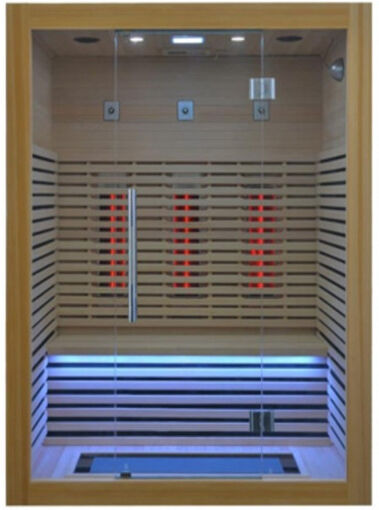
atlanticsaunas Atlantic Sauna Infrared Hanko 3 PersonSauna (Atlantic Glow 1.5)The Atlantic Saunas Infrared Hanko 3 Person Sauna brings calm, steady heat into your home in a way that feels easy and natural. It uses far infrared technology to warm the body directly, so you get the benefits of deep heat without raising the air temperature. With space for three, it’s roomy...3499,00 £*Shipping: 0,00 £Secure redirect to the provider
-
atlanticsaunas Atlantic Saunas Mono Traditional Indoor Sauna (Atlantic Core 0.9)The Atlantic Saunas Mono Traditional Indoor Sauna gives you that classic dry heat feel in a space that’s just right for one. It runs on a 2.3 kW Harvia stove that delivers steady, even warmth throughout the cabin. The compact square footprint makes it easy to fit into a spare room, loft or...2299,00 £*Shipping: 0,00 £Secure redirect to the provider
-
Is the Atlantic Ocean larger than Africa?
No, the Atlantic Ocean is not larger than Africa. Africa is the second largest continent in the world, covering an area of about 11.7 million square miles, while the Atlantic Ocean is the second largest ocean in the world, covering an area of about 41.1 million square miles. Therefore, Africa is significantly larger than the Atlantic Ocean. **
-
How cold is it in the Atlantic?
The temperature of the Atlantic Ocean varies depending on the location and time of year. In general, the surface water temperature can range from as low as 0°C (32°F) in the northern regions to as high as 30°C (86°F) in the tropics. The deeper water in the Atlantic tends to be colder, with temperatures dropping significantly in the deeper layers. Overall, the Atlantic Ocean can be quite cold in the northern regions and warmer in the southern and tropical regions. **
-
Where do the Atlantic and Pacific Oceans meet?
The Atlantic and Pacific Oceans meet at Cape Horn, located at the southernmost tip of South America in Chile. This iconic landmark is known for its treacherous waters and strong winds, making it a challenging point for sailors to navigate. Cape Horn is a significant maritime location where the two great oceans converge, creating a dramatic and awe-inspiring natural phenomenon. **
-
Is the Mediterranean as salty as the Atlantic?
The Mediterranean Sea is generally saltier than the Atlantic Ocean. This is because the Mediterranean has a higher evaporation rate compared to its freshwater input, leading to a higher concentration of salt. The Atlantic Ocean, on the other hand, receives a larger volume of freshwater input from rivers and precipitation, which helps to lower its overall salinity levels. **
* All prices are inclusive of VAT and, if applicable, plus shipping costs. The offer information is based on the details provided by the respective shop and is updated through automated processes. Real-time updates do not occur, so deviations can occur in individual cases. ** Note: Parts of this content were created by AI.